

Evacuation Yacht, Solace to Visit Jersey
Published 15:01 on 21 Aug 2026
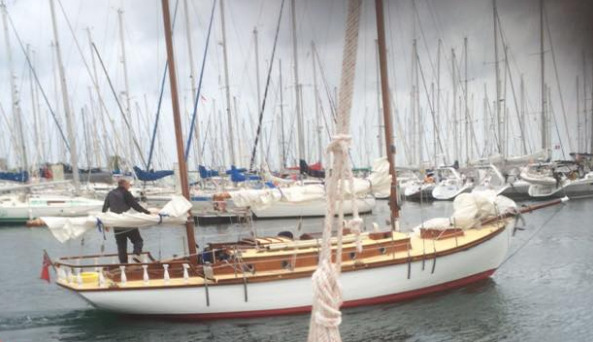
The yacht Solace is scheduled to arrive in St Helier on Saturday 22nd August for a few days. Built in 1929, she is an historic boat for Jersey as she was part of the 20 Jersey Little Ships, most from St Helier Yacht Club, that sailed from Jersey on June 16th 1940 at the urgent request of the British Admiralty to assist in the evacuation of Allied troops from Saint Malo under the code name Operation Aerial. This was the umbrella name for the troop evacuations from nine French ports . In all, there were over 21,000 personnel evacuated from Saint Malo.
A detachment of Royal Navy and Royal Engineers demolitions specialists (approximately 35 officers and men) had been sent from England with 8 tons of explosives on the destroyer HMS Wild Swan. Their mission was to demolish the Saint Malo fuel dumps, lock gates and other port facilities before the rapidly approaching Germans occupied the port. They were all evacuated and brought back safely to the island by the Jersey boats after HMS Wild Swan was forced to withdraw early by the Admiralty. The last Jersey boat left Saint Malo when the Germans were only about 5 miles from the gates of the town.
The owner and skipper of Solace at the time was Lionel Stevens. His crew for the Saint Malo operation were Paddy Bertram and F. Foster.
Lionel Stevens was also Honorary Secretary of the local branch of the RNLI and part of the crew on the first Jersey motorised lifeboat Howard D, a vessel donated by local philanthropist TB Davis. After the war in 1949, Lionel was awarded the RNLI Bronze Medal for the Gold Medal rescue of the yacht Maurice Georges on the lifeboat Elizabeth Rippon.
For the actions in Saint Malo in June 1940 the St Helier Yacht Club was awarded the special ensign that flies every day from the flagstaff of the Club on South Pier. It is the only flag of its type in the world to have been awarded as a Battle Honour, and is proudly flown by Club Members on their boats when afloat today. It is worth mentioning that Lionels son Robin was later Commodore of the Club.
In the early 1950s Lionel Stevens sold the boat as he needed a bigger vessel for his burgeoning family.
In about 1952 Solace was acquired by the then recently retired Royal Navy Commander Victor Clark, who had been awarded the Distinguished Service Cross (DSC) twice in World War 2. He was subsequently and coincidentally involved in the evacuation of troops from another Operation Aerial port, Saint Nazaire, on the 17th June 1940. Victor was not to know it, but this was on exactly the same day as his future purchase in 12 years, Solace, was in Saint Malo on the same Operation Aerial at a different port. Victor Clark was awarded his second DSC for his resistance and evasion efforts before being captured in Malaya in 1942.
In 1953, having retired from the Royal Navy, Victor Clark commenced an astonishing trip around the world in Solace, travelling to the West Indies and entering the Pacific Ocean through the Panama Canal. Travelling to many of the Pacific archipelagos, Solace was wrecked on a reef at Palmerston Island in the Cook Islands in 1954. The story of Victor Clarks 10 month stay on Palmerston and the islander assistance in rebuilding Solace, with her eventual return to back to the UK in 1959 is immortalised in his book On the Wind of a Dream. Her trip of 48,000 miles was the longest journey known at the time ever made in such a small craft. Bear in mind this was navigated by using the
stars and without any form of modern day satellite navigation.
After this epic trip the Solace continued to be used in the Clark family and eventually was acquired by Tom Saunt, who is Commander Clarks nephew. He spent 14 years rebuilding her and she is now based in Portland Harbour in Dorset. The boat has been within the Clark family now for nearly 75 years. Tom has been a professional sailing coach for 25 years and has worked with Swiss and German sailing teams. He is currently with Team GB Sailing.
Specifications Solace- Hillyard one design ketch
Original Builder: David Hillyard, Littlehampton
Build Year: 1929
Length including Bowsprit 12 Metres - Draft: 1.5 metres